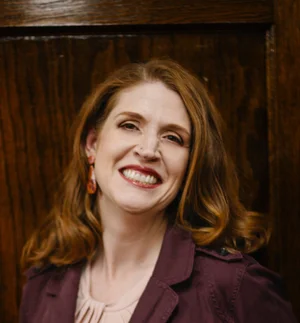
Piercing my witch’s nose
Growing up in fundamental evangelicalism, I was raised steeped in purity culture. For those who’ve seen the documentary Shiny Happy People , you’d be interested to know that my family was involved in Bill Gothard’s Institute in Basic Life Principals (IBLP) and Advanced Training Institute (ATI), his homeschool cult offshoot. It was a highly controlling and oppressive environment, and it probably goes without saying that nose rings were strictly prohibited. Not a great time in my childhood for many reasons that extend beyond the scope of this blog.
For those who aren’t familiar with the concept of purity culture, which is still thriving in many Christian circles, it’s the idea that virginity, particularly for a woman, is her greatest commodity and should be saved for her husband, whom she’ll be married to for life. As a teenager, she pledges a vow of abstinence, generally to her father. Often there’s a ceremony or a ring involved signifying the gravity of her commitment. With this pledge comes the responsibility not to tempt her brothers in Christ with immodest dress or lewd behavior. Depending on how conservative one’s denomination is, it might mean refraining from crop tops to two-piece bathing suits, or it could mean dressing more conservatively (in dresses, skirts) like is common where I live. Boys too, are supposed to make a commitment to abstinence, but they face little consequence if they ‘sin’, whereas the girl’s reputation is often irreparably damaged, particularly if she gets pregnant out of wedlock.
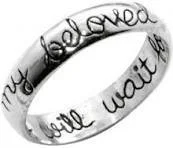
One example of a purity ring
The women in my family wore dresses and skirts—culottes on the rare occasion we needed activewear. We weren’t allowed to wear graphic t-shirts or V-necks—anything that would draw, or potentially draw attention to our bosoms—a difficult feat for me since my bosom drew attention to itself simply by nature of my genes. We were taught that our bodies were something to cover up and hide, shameful. Sinful, even, thanks to Eve’s Original Sin, and that our only purpose was to get married and have babies. Yet, at any moment we could be the cause of someone else’s fall from grace. The message was very clear that if we were assaulted, it was our fault—especially if we did not cry out for help. That was told to me once by an older woman in the cult. At no time where the men held accountable for their behavior. But such is often the way in highly authoritarian and patriarchal religious communities.
Before I continue, I’d like to stop and give a caveat. While I am no longer a Christian, my family still practices, and we have a good relationship despite our disagreements. I also have friends of all types of faiths: Pagan, Atheist, Agnostic, Catholic, Baha’i, Universalist Unitarians, Jewish, etc. I am not anti-faith. I have a lot of problems with our country, but I deeply believe in the breadth of the First Amendment. We have a right to practice, or not practice, our chosen belief system, and to gather peaceably with others who share it. We are a nation that protects religious freedom but should not give preferential treatment to any particular faith. To do so would make it a theocracy. My experiences happen to be in the Christian faith, but I’m not here to hate on Judeo-Christian values. There are plenty of beautiful Christ-followers whom I love and respect, even if I disagree on some of their stances. But I will call out oppression whenever and wherever I see it.
Returning to purity culture.
The word ‘modesty’ is a bit triggering for me, but I’ve come to take a neutral stance on the idea. If I truly support women, and support the expression of relgious freedom, then I have no problem with women choosing to dress in a way they deem modest—be it a skirt or a hijab or floor-length hair. What I do have a problem with is when men demand or guilt-trip woman into dressing by standards they impose—when women’s clothes aren’t their independent choice, but rather, their husband’s or their pastor’s. That I have a BIG problem with. (I could get into a theolgoical discussion about 1 Timothy 2: 9-10, the Bible verses most often cited in these discussions, but arguing isn’t my goal here.) I also have a problem with conservatively dressed women trash-talking those who don’t. I have a probem with mainstream-dressed women mocking the modest dress or headcoverings of women of faith. I have a problem when any woman’s perceived femininity is tied to their external trappings. Whatever happened to internal beauty? Shave your legs, or don’t shave your legs. Wear makeup or don’t. I don’t care if you wear fishnets and go-go boots with spiked blue hair, or monochromatic ankle-length dresses and go barefoot. Stop being bitches, ladies. I don’t care what clothes you wear.
So about my nose
From the time I was a little girl, I thought that nose rings were pretty. We girls were allowed a single ear piercing and tasteful earrings, although the parameters of which were entirely at the discretion of my parents and sometimes made random sense. (In the 80s, my Mom wore some earrings that can only be described as garish. But then again, so did most of the generation.) But they made it very clear that if the boys ever came home with a ear piercing like “the homosexuals”, they would be ripped out. Plain and simple. I don’t believe I ever heard my parents say “faggot” but the message for my brothers was clear, the consequences would be far more dire for them than a shredded ear lobe.
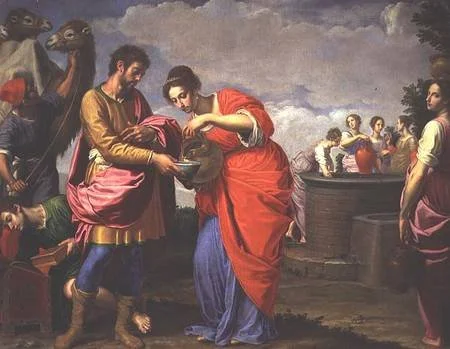
Rebecca and Eliezer at the Well - Ottavio Vannini
But we girls were told that nose rings put us square in the camps of “ladies of the night”, “fallen women”, and “harlots”. To even desire such an abomination and defacement of our countenance meant that we had the “Spirit of Jezebel”. It was hard for me to understand why holes in one part of my head were acceptable, but not another. And it was very confusing since in Genesis 24, Abraham’s servant, Eliezer, gives Rebekah a gold nose ring as a marriage token for his son Isaac. I mean, ISAAC and REBEKAH!! There are other instances in the Old Testament where the Israelites bring their nose rings as offerings. So why was it okay then? Because it’s of the world and we are to be set apart from the world. Then I got in trouble for questioning authority. That’s happened a lot to me over the years. (It’s the curse/blessing of being a seeker.) Instead, I contented myself with awkwardly staring at strangers and imagining a world where I was allowed to look like them.

I eventually grew up, but I’d also grown into a witch’s nose. By the time I was in my early 20s, I’d become used to people asking me if I’d broken it. “Nope. It’s just gnarled like that.” Then it grew some little cyst on the side that made me want to take a knife to it myself. The tip manages to be both bulbous and angular and I have nostrils that won’t quit and flare involuntarily. I’ve had body issues since I was 8 when my mom first put me on a medically supervised diet, but my nose has been a tough thing to escape as an adult. You can’t diet your way out of your schonoz.
I got my first tattoo in 2014 and started working on a literary sleeve, shortly thereafter. At the time I was still a believer, but it was a way for me to challenge some of the more rigid notions of how I could and couldn’t present myself. I was going to a pretty chill church at the time, and half the pastoral staff had ink. No one batted an eye at me getting book quotes on my arm, and what a freeing experience it was. To be me—to wear books—take them everywhere I went, was heaven. But there was no way I could entertain the nasal piercing. Not a chance. Why draw attention to a nose so hideous that all I needed for a perfect Halloween costume was a black cloak and a basket of ruby red apples?
The Awakening
Over the winter, however, I did a lot of deep work on my body image issues tied to purity culture. I examined why after losing 120 pounds I still found my body repulsive. Why was I still afraid to show cleavage or wear shorts or skirts? Why was it that if a man looked at me for longer than two seconds, I felt guilty? How come, and this killed me, did I find myself judging woman for what I used to think were ‘trampy’ clothes? That made no sense!! I’m a feminist for goddess sake! My therapist is amazing, but I read on the topic (see below), got on discussion boards and found other people who were experiencing similar discomfort. There were a lot of tears, and many calls to my friends through it all, but I had some big revelations.
After finishing the audiobook of The Body is Not an Apology, I had a eureka moment. My nose was just a nose! There’s no moral weight to any body part. I was the one who’d assigned evilness to my nose. So what? I’d been bullied a little. But I’d been bullied for any number of things I don’t let define me now. I needed to love my nose like I needed to love every other part of me because I’m a unique human being. In all of human history, they’ll only ever be one Jennifer McKenna, this nose included. We say that frequently, but do we really give pause to consider its implications? I don’t.
Suddenly piercing my nose felt like exactly what I needed to do to reclaim my ownership over it. But not just it, over my whole body. Wanting a facial piercing doesn’t make me a fallen woman, it makes me a free-thinking woman. And so what, if I am a fallen woman? Does that make me less human? Does that make me less loveable? Does that make me less worthy or enough?
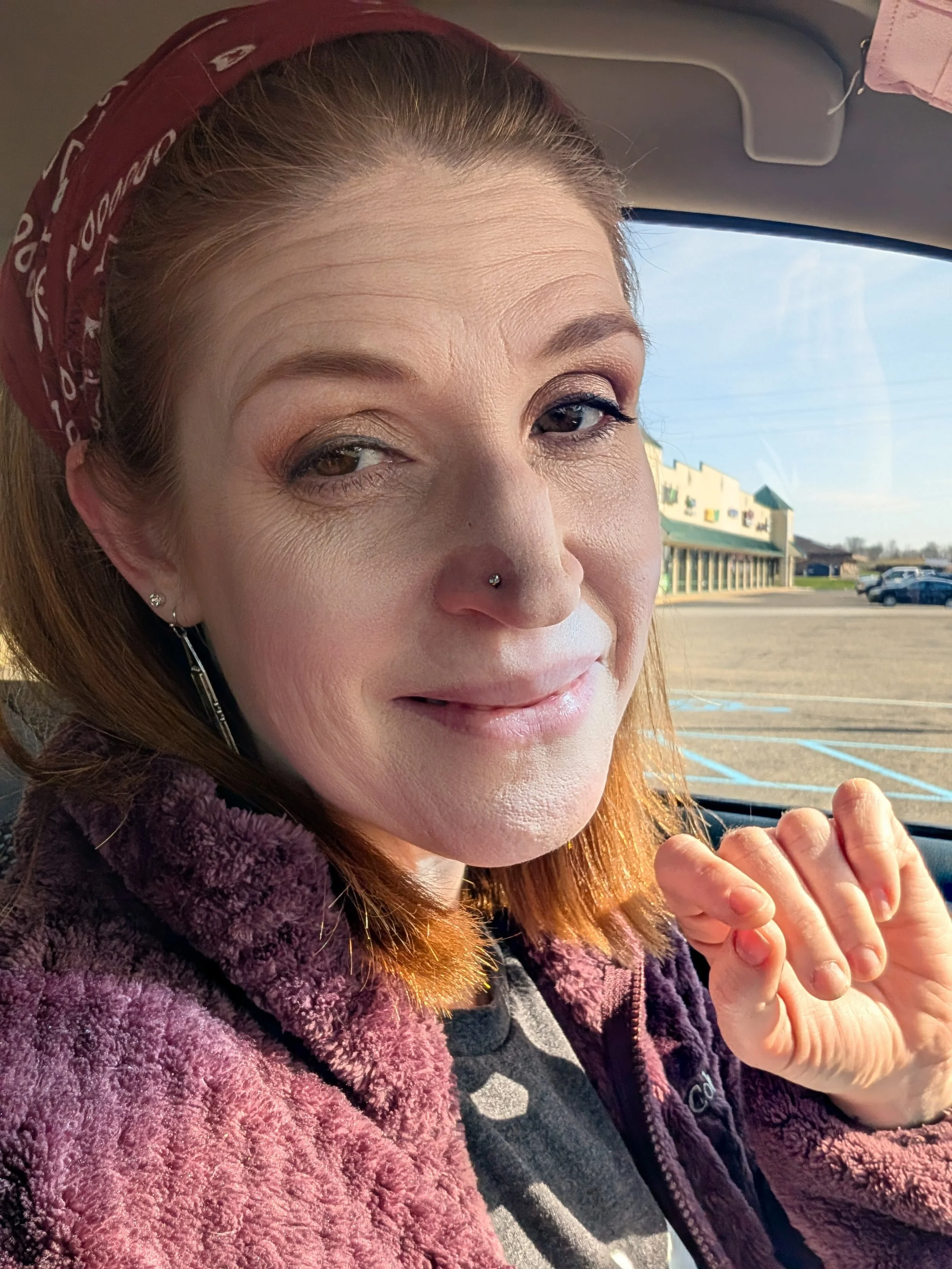
So, I made an appointment for the following week. Let me tell you, it was one of the happiest, most fulfilling days of my life, getting my nose pierced. I’ve loved getting tattooed—and I have a considerable amount of ink. But I’ve never felt and looked more like myself than I have since getting this tiny little stud. It’s just me saying to myself, “Yeah. I own this nose the way it is.” And every time I look in the mirror it also reminds me that I, Me, No. One. Else. owns any part of this body. Not now, or ever. It has always been 100% mine. And it WILL always be 100% mine.
And so has yours.
Screw purity rings. I'll take one of Eliezar’s rings every time.
For anyone interested in reading more about this topic I reccomend these books:
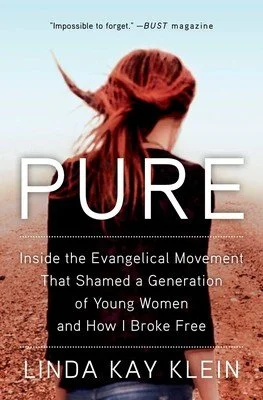
Pure: Iside the Evangelical Movement That Shamed a Generation of Young Women and How I Broke Free by Linda Kay Klein
I knew what I’d gone through, but hearing the experiences of so many others was heartbreakingly validating for me. I cried through about 80% of this book and had to take a number of breaks. But it was tremendously healing in helping me believe I wasn’t crazy. I wasn’t alone.
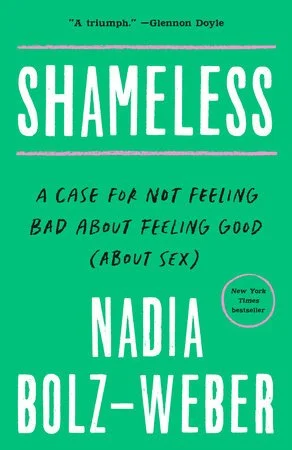
Shameless: A Case for Not Feeling Bad About Feeling Good by Nadia Bolz-Weber
This book challenges some of the negative ideas around sex that purity culture naturally lend itself towards. Nadia Bolz-Weber is a pastor and theologian and celebrates consensual sex, in its varied forms, as a gift from God.
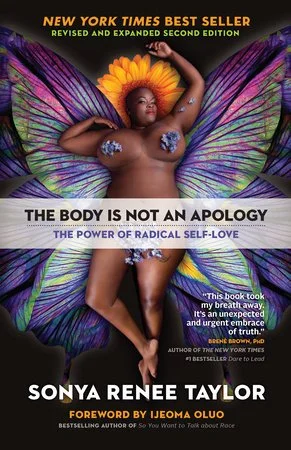
The Body is Not an Apology, Second Edition: The Power of Radical Self-Love by Sonya Renee Taylor
I’ve read this book twice. The first time I wasn’t quite ready and thought it was a little too radical. But the second time, it was what really helped me break free from the chains holding me to past expectations. I imagine it’s a book I’ll return to again and again. If for no other reason than Ms. Taylor reminds you that radical self-love for your body means growing in empathy and radical love for other bodies—bodies different from your own. For how can you fully love someone who looks different than you when you cannot love yourself? It’s a sobering thought and an excellent read.