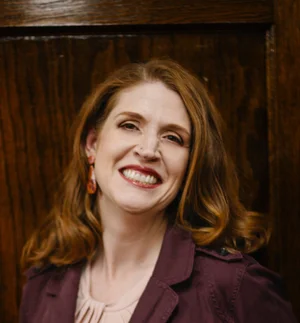
Interview with Author Karen Novak, part 1
How Karen and I met
I met Karen Novak (she/her) on the platform formally known as Twitter in 2022 by what some would call chance, but what we believe, and in Part 2 of the interview will discuss at length, is synchronicity. We hit it off over several exchanges of 240-character tweets and soon took our communication to private messaging where we were surprised to discover we lived 20 miles from each other. We soon met for coffee and have since developed a close friendship. Karen has imparted immeasurable writing and life wisdom and is the glue of our bi-weekly writing circle composed of two other exceptional women.

Karen Novak
Karen holds a degree in creative writing and film studies, has published four novels with Bloomsbury, and authored a dizzying number of short stories and poems. She’s formerly been on faculty with Women Writing for (a) Change, and has years of teaching and editorial experience to her credit, although now she considers herself more of a “manuscript therapist” than editor. She’s agreed to chat with me today about the intersection of mental illness and the writer’s life.
Our Chat
Jennifer
“Karen, thank you so much for agreeing to talk with me today. Are you okay if we just keep this really informal since I’m brand new to interviewing and I’m more than a little nervous?”
Karen
“I'm not used to being interviewed, so we're fine.”
Jennifer
“Okay, great. So, as you know, mental illness is a major theme in THE END, BY ME, and you've written extensively about it in your books as well. We share a bipolar diagnosis, so my first question is, how does living with bipolar affect your writing process on a day-to-day basis?”
Karen
“That is a very good question, and I think about it a lot. I was told recently that, in the larger pool of bipolar people, 70% of the bipolar experience is depression while only 30% of it is the up phase of mania. I can go through phases in which I will be up at 2 in the morning, every morning having gone to bed at 11, I’ll be drinking coffee and writing because that is what my brain wants to do. I can go for that way for months, and I have. I produce good work, but it's a different kind of work than I produce when I am more grounded in what I consider to be my ideal range of time, when I get 6 or 7 hours of sleep, like I'm doing now. Then I can start work at, you know, 8:30, 9 o'clock. Beyond doing what I can to keep to a routine, I have no control over these phases. It's been more a matter of learning to manage my energy flow, which is different from non-bipolar brains, That's what bipolar feels like—a fluctuation of emotional and physical and mental energies. I have found living with it to be like living with anything else. The classic example: If you live with diabetes, you may need to stop every few hours and give yourself an insulin shot. You just learn to adapt to what you're working with. I don't know any other way to work, so I just work with it as best I can.”
Jennifer
“Do you feel at times like it’s a superpower?”
Karen
“I don't know. I've never been without it, so I can't remember a time when I didn't have it, and then I found out I did. The diagnosis did not leave me feeling special. It left me feeling relieved to have an explanation. I am a creative person. Bipolar disorder and creativity can travel together. I'm interested in the connection between the two. Does one precede the other? Is one the outcome of the other? Bipolar is not synonymous with intelligence and creativity. It's not an if-then situation. But there's enough of a both-and pattern there to suggest that the two are somehow linked on some level. Creativity interests me more than having bipolar disorder. The human mind interests me, and watching other people work, learning their processes, I find that fascinating. How do you work within your brain's operating system? I believe we all have different operating systems. Perhaps conditions like autism are just operating systems. Bipolar is, to me, my operating system. What we look at as mental health issues might just be part of the reality that all brain are wired differently, and it's not so much being out of the norm as the fact the norm doesn't allow for these kinds of processes, these kinds of methodologies.”
Jennifer
“The same is true for me. I don’t know what it’s like NOT to have it. But there are those times when I’m in a manic or hypo-manic phase when words come so easily and I write for hours completely unaware of time passing. When I look up, I’m like! This is fantastic! And then I have no motivation. Regardless, meds and therapy are your best friends.”
Karen
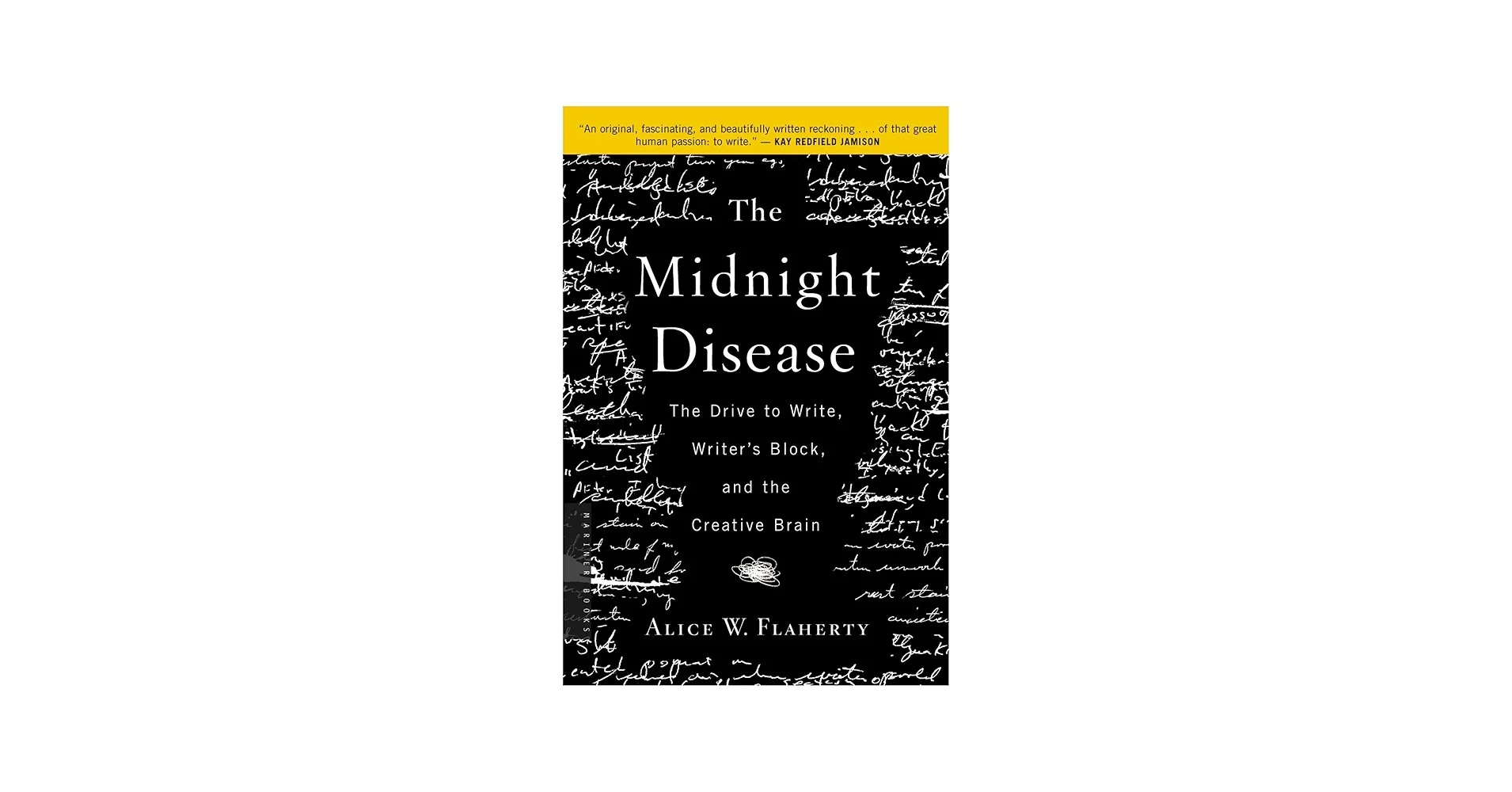
“Absolutely. Having read Alice Flaherty's The Midnight Disease gave me some additional perspective.”
Jennifer
“I was about to ask what books you’d studied up on, since I know you’re one to do so.”
Karen
“Curiosity can be a harsh mistress. Flaherty’s book was published about maybe twenty years ago. While admittedly scientific, it's also one of the most beautiful literary books I've ever read. In The Midnight Disease, Flaherty explores what’s happening in the brain when it writes and in the mind when it writes. Flaherty, who is a neurobiologist, finds that what we call creativity looks like a kind of seizure. I want to stress that I may not be getting this right. It's been a long time since I've read the book. I know that seizure disorders are discussed as are many other of her findings. One vital bit of information was that writer’s block can come from having too much to say. Also, procrastination was once considered a virtue, the proper conserving your energy for a better time. According to Flaherty, even pigeons procrastinate. The idea that people think writers are a little weird is based on hard evidence that we are a little weird when it comes to the way our brains and minds work.”
Jennifer
“That is fascinating and kind of tracks.”
Karen
“One thing I loved most about the book was learning that when you're writing, the part of your brain that deals with music, which is on one side, and the part of your brain that deals with meaning, which is on the other in almost in the exact same place—they're talking to each other. Throughout your writing. You are… you are creating music that has specific meaning, but the meaning has to be musical. And that's what writers are chasing, that sense of creating a precisely meaningful music experience with language.”
Jennifer
“In terms of representation, how would you like to see characters with mental illness portrayed in fiction? I think all too often we see the severely mentally or criminially insane, but little balance beyond that. Mental illness isn’t a monolith. Nor is living with it.”
Karen
“I would like to see mental illness portrayed like it's like having the flu. Your head may be fuzzy, and you might not feel good, but you're still a fully human human being. You are still responsible for your actions. You still can empathize. You can still be kind, and you can still do all those things you might not feel like doing at the moment, but you still have a responsibility as a human being to try to do. Now, if you can't do that, that's when you need intervention—be it medicinal, therapeutic, or hospitalization. I've been in all three positions. I am grateful they were there. So, you know, it's just…it's not okay to hurt people, for whatever reason you may be using to justify it.”
Jennifer
“That’s very well said and I agree with you 100%. Well, circling back to creativity—when you feel like you are in a slump, due to brain chemistry or plain old writer’s block, what do you do to refill your creative cup? How do you nourish your soul?”
Karen
“I go looking for moments of other people's creativity. I listen to music, I look at art. I try to do something that is creative outside of writing—I just finished painting one of our doors. That did a great deal of good for where I was at that point in time. There’s something about choosing a paint color—you can put care into that. It is a project that has a beginning, middle, and end. There's prep work, there's the painting, and then there's the cleanup. It's simply not a I'm going to invest my soul in this kind of moment. While doing that, should I get the impulse to do even the slightest bit of artistic work, even if it's only thirty seconds of writing down a sentence that fell out of the sky, I stop and write it down. That is going to prime the pump.”
Jennifer
“Creativity breeds creativity.”
Karen
“Exactly. I find, also, when I'm coming out of one of the work isn’t working phases, I write a lot of poetry. I don't think of myself as a poet, and I don't know why these things want to be poems. But they want to be poems, and so I write poems that are very much like prose, but they're poems. When that starts, I know that whatever's locked up is unlocking. The ice jam is breaking.”
TO BE CONTINUED….
In Part 2, Karen and I discuss Carl Jung’s Theory of Synchronicity, how it relates to creativity, process vs. publication, and how to find an effective writing group.
For more information on Karen, visit her website at www.karennovakwrites.com, or contact her directly at karennovakwrites@gmail.com